
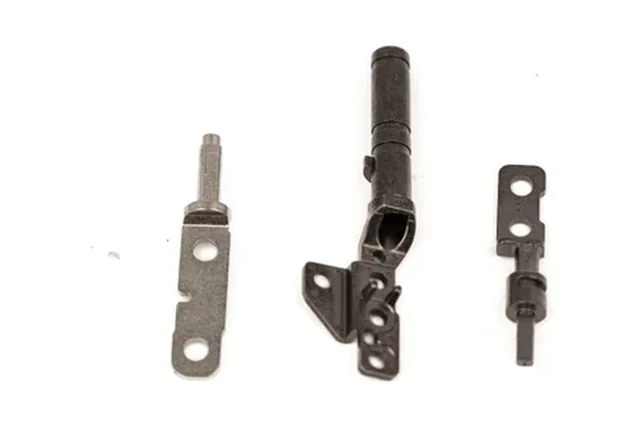
Small shaft and pivot references
Integrated flats and mounting features are assessed with the journal requirements.
Discuss a similar component →Compact shaft and pin geometries reviewed for functional diameters, alignment, wear and secondary finishing.
Integrated flats and mounting features are assessed with the journal requirements.
Discuss a similar component →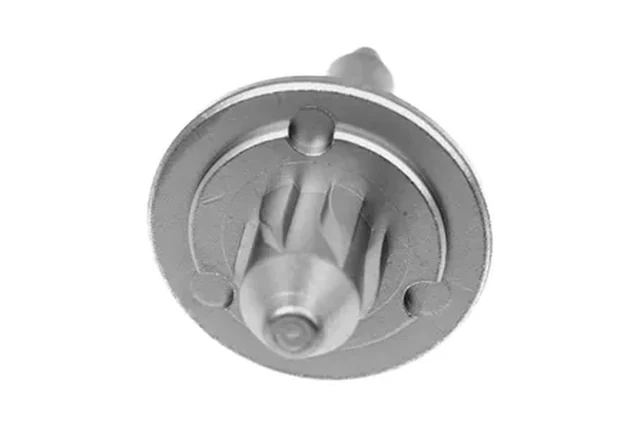
A geometry reference for an integrated shaft form; application and material are drawing-specific.
Discuss a similar component →Representative custom component references. Dimensions, material, manufacturing route and validation requirements are confirmed from your drawing; these are not off-the-shelf catalog items.
Rotational parts with integrated drive, locking or cross-features that may reduce multiple machining setups.
Pivot, alignment or load-transfer components where diameter, straightness, hardness and mating fit are critical.
Reciprocating parts where sliding diameter, surface finish, straightness, impact face or magnetic behavior can dominate the route.
Feature-rich blank geometry can be MIM while critical journals, bores or sealing/sliding surfaces remain machined or ground.
| Review area | Information to define | Manufacturing decision |
|---|---|---|
| Journals & fits | Diameter tolerance, surface finish, bearing length and the mating bore. | Reserve turning or grinding for functional diameters where appropriate. |
| Alignment | Coaxiality/runout, straightness, datum shoulders and overall stack-up. | Plan the sequence of heat treatment and finishing around the final datum scheme. |
| Cross-features | Flats, holes, splines, grooves and their relation to the journal. | Compare an integrated MIM shape with a turned blank plus secondary operations. |
| Moving duty | Travel, cycle count, lubrication, wear, contamination and any magnetic requirement. | A shaft photo does not establish plunger suitability or magnetic properties; validate those separately. |
Material & final condition. Material and final condition depend on strength, wear, corrosion and, where specified, magnetic behavior. Simple axisymmetric parts are assessed against turning; complex cross-features may justify MIM or a hybrid route. Review material data →
| Part condition | First route to evaluate | Why / watchout |
|---|---|---|
| Simple cylindrical shaft / pin | Turning / CNC / centerless grinding | Axisymmetric geometry and precision diameters are naturally suited to conventional machining. |
| Small shaft with forks, lugs, flats or cross-features | MIM + selective machining | Integrated 3D geometry can reduce setups, while critical journals or bearing surfaces can still be finished conventionally. |
| Precision sliding plunger | Turning / grinding, or MIM + finish | Straightness, surface finish, clearance, leakage or magnetic function can matter more than near-net-shape geometry. |
| Press-friendly compact pin/hub form | PM or machining | Conventional PM may work when geometry and density align with compaction direction; tight transverse features can reduce the advantage. |
| Prototype / low-volume spindle | CNC | Avoid tooling when design is still changing or volume does not support it. |
Critical surfaces stay critical. MIM or PM can create the bulk geometry, but a bearing journal, seal-running diameter, precision locating pin or valve-plunger surface may still need turning, grinding, honing or polishing.
Review geometry, material and volume, identify critical features and clarify the proposed tooling and secondary operations.
Define trial parts, dimensional checks, material confirmation and any customer-required functional approval.
Confirm the approved route, control plan, packaging and repeat-supply requirements for the program.
Plungers and armatures where sliding finish, straightness and magnetic behavior matter.
Application guide →Locating pins, coupling shafts and moving interfaces.
Application guide →Pivots, shafts and compact motion-transfer interfaces.
Application guide →Plungers, tappets and drive interfaces where wear and precision finishing matter.
Application guide →Provide critical diameters, runout/straightness, stroke or duty, mating clearances, hardness/finish and annual quantity.