
Material reference data
Grades and numerical properties below are taken from the current SINTS material list, including MIM steels, stainless steels, one magnetic alloy and a PM alloy entry.
Compare material grades and reference properties, then send your drawing and target condition for a project-specific review of material, manufacturing route and inspection requirements.
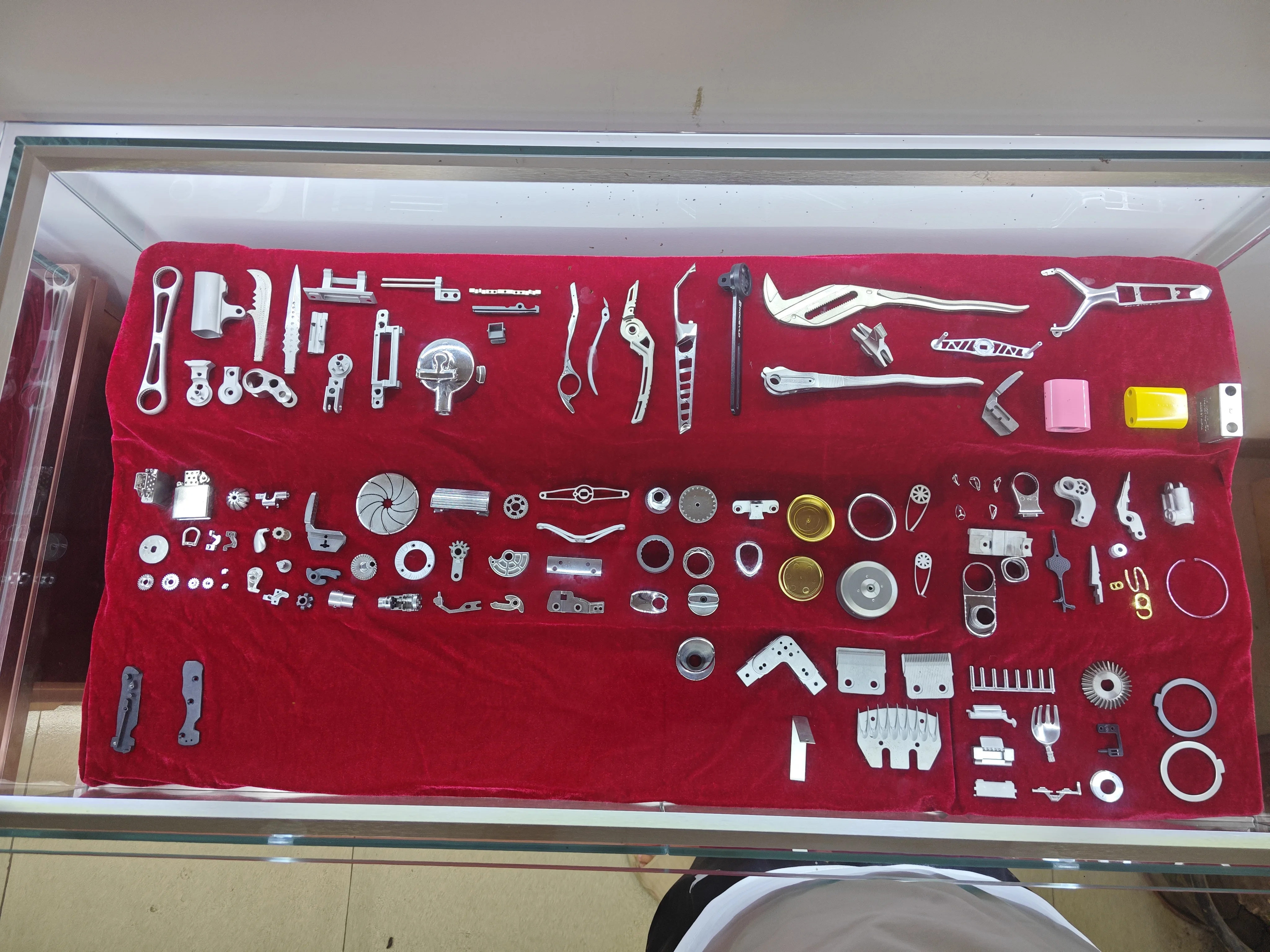
The tables below provide material reference data. Final grade, manufacturing route, heat treatment and acceptance criteria are agreed against your drawing and application before quotation.
Grades and numerical properties below are taken from the current SINTS material list, including MIM steels, stainless steels, one magnetic alloy and a PM alloy entry.
Titanium, aluminum, tungsten and copper material families are within SINTS project capability. Because exact grade, powder/feedstock or machining route, heat treatment and acceptance criteria vary by program, the specification is confirmed before quotation and tooling.
Heat-treatment condition, density, hardness and mechanical properties should be tied to the final drawing/specification and validated through the agreed sample and quality plan.
These values reproduce the current material sheet. Heat-treated rows are shown separately because the final condition changes strength and hardness substantially.
| Grade | Condition | Yield strength | UTS | Elongation | Hardness | Density |
|---|---|---|---|---|---|---|
| MIM 4605 (Fe-2Ni) | Sintered | ≥400 MPa | ≥600 MPa | ≥5% | ≥150 HV10 | ≥7.6 g/cm³ |
| MIM 4605 (Fe-2Ni) | Heat treated | 1425 MPa | 1610 MPa | 3% | 50–60 HRC | — |
| MIM 4140 | Sintered | 625 MPa | 825 MPa | 9% | 70–110 HRB | 7.6–7.8 g/cm³ |
| MIM 4140 | Heat treated | 820 MPa | 1405 MPa | 5% | 50–60 HRC | — |
Reference properties for SINTS stainless steel grades are listed below. Specify the exact grade and final condition when requesting a quotation.
| Grade | Condition | Yield strength | UTS | Elongation | Hardness | Density |
|---|---|---|---|---|---|---|
| MIM SS316L | Sintered | ≥180 MPa | ≥510 MPa | ≥50% | 120 HV10 | ≥7.6 g/cm³ |
| MIM SS316 | Sintered | 447 MPa | 732 MPa | 24% | 70–100 HRB | 7.6–7.8 g/cm³ |
| MIM SS304 | Sintered | 270 MPa | 480 MPa | 35% | 110–160 HV1 | 7.6–7.8 g/cm³ |
| MIM SS440C | Sintered | — | — | — | 30–40 HRB | 7.6–7.8 g/cm³ |
| MIM SS440C | Heat treated | 1150 MPa | 1310 MPa | 6% | 50–60 HRC | — |
| MIM SS420 / SS410 | Sintered | — | — | — | 30–40 HRB | 7.6–7.8 g/cm³ |
| MIM SS420 / SS410 | Heat treated | 1150 MPa | 1310 MPa | 6% | 40–50 HRC | — |
| MIM 17-4PH | Sintered | 720 MPa | 950 MPa | Confirm for project | 20–30 HRC | ≥7.6 g/cm³ |
| MIM 17-4PH | Heat treated | 1070 MPa | 1160 MPa | ≥5% | 35–45 HRC | — |
For as-sintered 17-4PH, confirm the required elongation with SINTS before using it in design calculations.
| Material | Process / condition | Yield strength | UTS | Elongation | Hardness | Density |
|---|---|---|---|---|---|---|
| MIM HK30 | Sintered | 463 MPa | 782 MPa | 18% | 160–250 HV1 | 7.6–7.8 g/cm³ |
| MIM FeSi 3.0 | Sintered | 372 MPa | 525 MPa | 23% | 80 HRB | 7.6–7.8 g/cm³ |
| FD-05N2C-360 (AB Powder) | PM · heat treated | 390 MPa | 540 MPa | 2% | 30–40 HRC | 6.6–6.9 g/cm³ |
SINTS evaluates titanium, aluminum, tungsten and copper alloy components from the required properties, drawing and volume. The exact grade, manufacturing route and validation plan are confirmed for each project.
Projects are reviewed from the exact alloy, geometry, contamination or surface requirements, volume and critical dimensions before SINTS confirms the practical manufacturing route.
Projects are reviewed from alloy, density or mechanical-property targets, geometry, corrosion or finish requirements and volume before the manufacturing route is confirmed.
Projects are reviewed from the exact material system, density or property targets, geometry, wear requirements and production route before quotation.
Projects are reviewed from conductivity, strength, density, finish, geometry and process requirements before quotation.
Send the exact grade or material family, drawing, annual volume, target condition and critical properties. SINTS will confirm whether the material and manufacturing route can be supported before tooling.
Load, wear, corrosion, temperature, magnetic response, fatigue and contact conditions.
Wall thickness, feature complexity, pressing direction, sintering distortion risk and critical datums.
Annual demand affects whether MIM/PM tooling is justified or machining remains more practical.
Heat treatment, hardness, surface finish, coating and post-sinter machining requirements.
Agree on the sample, dimensional, material and functional checks before serial production.
Define which certificates, inspection data and project-specific reports are actually required by the OEM.
Answers based on the current SINTS material sheet and project-review approach.
The listed stainless grades include 316L, 316, 304, 440C, 420/410 and 17-4PH. Specify the required grade and final condition for your project.
MIM 4605 (Fe-2Ni) and MIM 4140 are listed in both sintered and heat-treated conditions.
Yes. The current material sheet lists MIM FeSi 3.0 in the sintered condition with yield, tensile, elongation, hardness and density values.
Yes. Titanium-alloy components are within SINTS project capability. The exact alloy, manufacturing route, property targets and validation requirements are confirmed from the drawing and application.
Yes. SINTS can support aluminum-alloy component programs. The exact alloy and whether PM, machining or another route is appropriate are confirmed project by project.
Yes, additional materials can be evaluated. Material availability, manufacturing route and target properties must be agreed for the specific project.