
Armature / plunger
Geometry may be simple, but magnetic response, sliding clearance, straightness, surface finish and wear can dominate the process decision.
Small valves combine magnetic actuation, guided motion, sealing and fluid passages in very little space. That makes them attractive for near-net-shape manufacturing — but it also means magnetic behavior, leakage, sliding surfaces, concentricity and media compatibility can matter more than geometry alone.
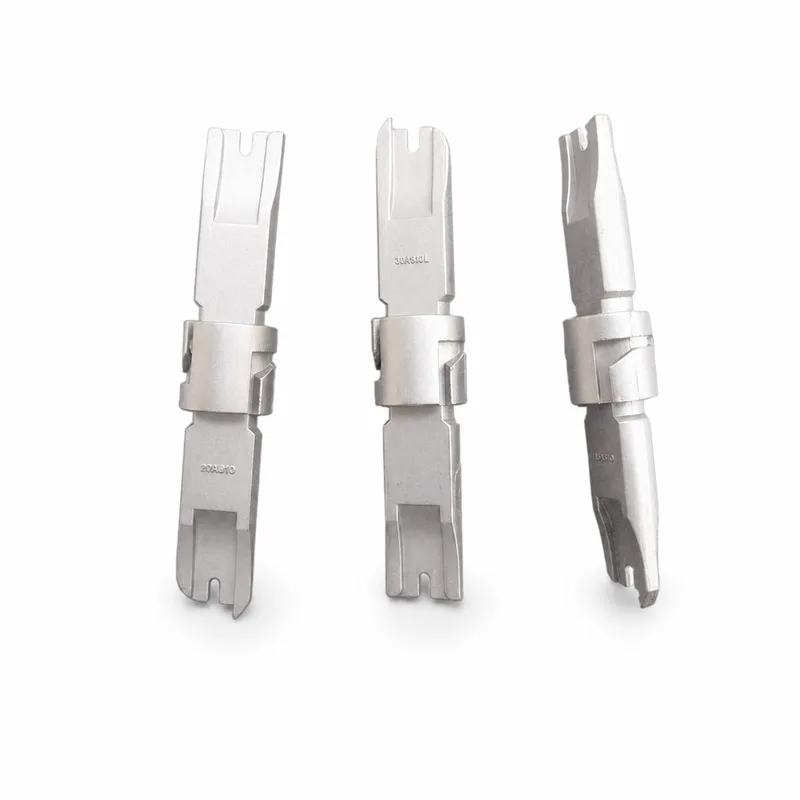
Manufacturing reference: Representative SINTS components are shown to illustrate compact functional, shaft and 3D geometries relevant to solenoid and miniature fluid-control reviews. Magnetic response, leakage, media compatibility, cleanliness and finishing requirements are evaluated against the project specification.
The handbook recommends breaking customer requirements into medium, pressure, flow, valve function, response, leakage, life, material and volume. That same logic determines whether a metal component should be MIM, PM, CNC or a hybrid.
Geometry may be simple, but magnetic response, sliding clearance, straightness, surface finish and wear can dominate the process decision.
Soft-magnetic material selection and air-gap consistency matter. MIM can be relevant to compact complex shapes, but magnetic properties must be validated in the actual material condition.
Near-net-shape geometry can reduce machining, while the final sealing surface, concentricity and roughness may still require precision finishing.
Small 3D parts with hooks, bosses, pockets and repeated-volume demand are often the clearest MIM opportunities because sealing precision is less likely to dominate the whole part.
| Component | Critical function | First route to evaluate | Why / watchout |
|---|---|---|---|
| Complex armature / plunger | Moves in magnetic field | MIM + finishing / CNC | Compact features may suit MIM, but sliding diameter, straightness, surface finish, magnetic condition and air-gap performance can require secondary machining or grinding. |
| Simple cylindrical plunger | Guided axial motion | CNC / turning / grinding | When geometry is mainly rotational and a precision sliding surface dominates, machining can remain the most direct route. |
| Pole piece / magnetic core feature | Completes magnetic circuit | MIM soft magnetic / machined soft magnetic | Geometry, permeability, saturation, coercivity, heat treatment and final air gap must be evaluated together. |
| Guide sleeve | Controls armature alignment | Tube / turning / precision forming | Thin-wall concentric sleeves often favor conventional precision routes; MIM only becomes interesting when additional integrated 3D features change the economics. |
| Valve-seat carrier / small body insert | Locates orifice and seal | MIM + precision finish | Complex ports or integrated features may favor MIM, while sealing faces and critical bores should be treated as finishing operations where needed. |
| Rocker / lever / retainer | Transfers or retains motion | MIM — high potential | Small complex geometry and repeated volume are a good match if fatigue, contact stress and material compatibility are acceptable. |
| Spring seat / keeper | Locates spring or return system | MIM / PM / stamping | Route depends on thickness, pressing direction, 3D features and annual volume. |
| Precision orifice / sealing face | Defines flow / leakage | Precision machining / finishing | Do not assume as-sintered sealing geometry is sufficient. |
SINTS material data includes MIM FeSi 3.0. Other magnetic or specialty grades are evaluated against the required magnetic properties and manufacturing conditions.
Permeability, saturation, coercivity and the final heat-treatment state can matter as much as mechanical strength.
Air, oxygen, water, reagent, coolant or chemical media can change the right stainless or surface strategy.
Plunger surfaces need stable clearance and low friction. Hardness, finish, contamination and lubrication must be considered together.
Miniature fluid-control systems can be sensitive to particles. Deburring, cleaning, residual media and packaging should be part of the RFQ.
SINTS component examples illustrate manufacturing geometry and process options. Final application suitability is assessed from your drawing and operating requirements.
Useful for discussing integrated 3D features and repeat-volume small-part production. Magnetic response, sealing, media compatibility and final finishing still require project review.
SINTS manufacturing reference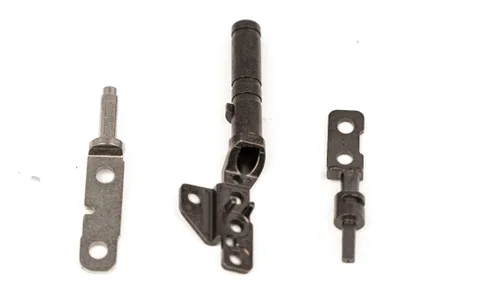
Useful for discussing guided motion and where rotational interfaces, bores, sliding diameters or bearing surfaces should remain machined or ground.
SINTS manufacturing reference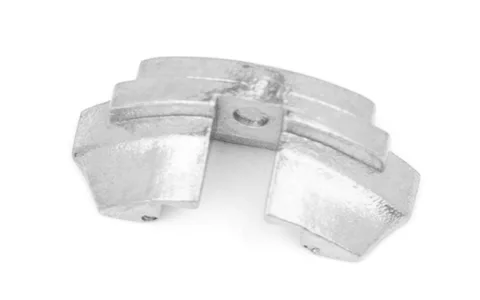
Useful for discussing non-axisymmetric parts where near-net-shape production may reduce machining setups while critical functional surfaces remain selectively finished.
SINTS manufacturing referenceGas or liquid, chemistry, cleanliness and any material-compatibility limits.
Inlet, outlet and differential pressure over the operating range.
Orifice, Cv or target flow if known.
2/2, 3/2, NC, NO, direct acting, isolated, pilot or proportional.
Functional leakage and response targets rather than only dimensional tolerances.
Cycle target, actuation frequency and thermal duty.
Current grade, heat treatment, corrosion and magnetic requirements.
Critical sealing, sliding, concentric and datum features.
Volume determines whether tooling-based routes are economically sensible.
Use this application guide for magnetic response, leakage, media, sliding and cleanliness context. Use Product family pages for the component-level manufacturing decision.
Valve-adjacent, seat-carrier, nozzle, plunger and fluid-interface components where leakage, corrosion and finishing matter.
Product family →Guided motion parts where sliding diameter, straightness, fits and secondary machining or grinding may dominate.
Product family →Compact carriers, seats, inserts and interface parts that combine small size with controlled datums and functional surfaces.
Product family →Rockers, levers, retainers, keepers and spring-seat geometry used around compact actuation mechanisms.
Product family →Drawing-led parts that do not fit a standard family and need process, material and finishing review before categorization.
Product family →Solenoid and miniature fluid-control valves use metal parts in the magnetic circuit, the motion guide and the fluid path. These answers cover soft-magnetic components, sealing surfaces and how the three functions are reviewed separately.
Sometimes, especially when the plunger has integrated 3D features. A simple cylindrical plunger with demanding sliding finish, straightness and magnetic performance may still be better machined or may use MIM only as a preform followed by finishing.
It should not be assumed. Leakage requirements, roughness, concentricity and media determine whether machining, lapping, polishing or another finishing step is needed.
The current SINTS material data includes MIM FeSi 3.0. Final magnetic properties and the correct heat-treatment state still need project-specific confirmation.
Medium, pressure, flow or orifice, valve function, leakage, response, duty cycle, life, material, critical surfaces and annual volume should be supplied with the drawing.
It covers the metal parts inside a small valve or solenoid — plungers and armatures, pole pieces and cores, springs, guides and bushings, seats, orifices and the small housings around them. A single valve part usually belongs to one of three functions: the magnetic circuit that generates force, the guide that constrains motion, or the fluid path that seals and meters, and each function is reviewed on different criteria.
Saturation flux density, permeability, coercivity and the losses at the actual drive frequency all matter, and they depend on composition, density, purity and heat treatment as much as on the alloy family. Soft-magnetic behaviour is therefore a set of measured properties to be confirmed against the magnetic requirement, not a property implied by a grade name. Where the force margin is tight, those properties need to be agreed before tooling rather than checked after.
Generally a sealing or metering surface is treated as a functional surface, not as a finished one. Surface roughness, porosity and dimensional control on a seat or orifice usually drive performance, so the seat is either produced by a finishing operation or the surface condition is specified and verified as a requirement in its own right. Assuming a sintered surface is sealing-ready without that review is a common source of leakage problems.
Send the drawing, the leakage and flow requirement, the sealing surface and how it is achieved, the fluid and its temperature, the magnetic or force requirement for any part in the magnetic circuit, the stroke and cycle duty, the critical interfaces with mating parts and the annual volume. For miniature valves those functional inputs decide the route more than the overall dimensions do.
We can review near-net-shape potential, finishing-critical surfaces, material route and where machining should remain in the process.