Company Profile

31 Years of Sintered Metal on a Single Campus

SINTS (Zhongshan Xintaixing Powder Metallurgy Co., Ltd.) has manufactured precision sintered components since 1995. Metal injection molding, conventional powder metallurgy, CNC finishing, heat treatment and full metallurgical inspection all run inside one 45,000 m² plant in Zhongshan, Guangdong — no brokered processes, no hidden subcontractors.

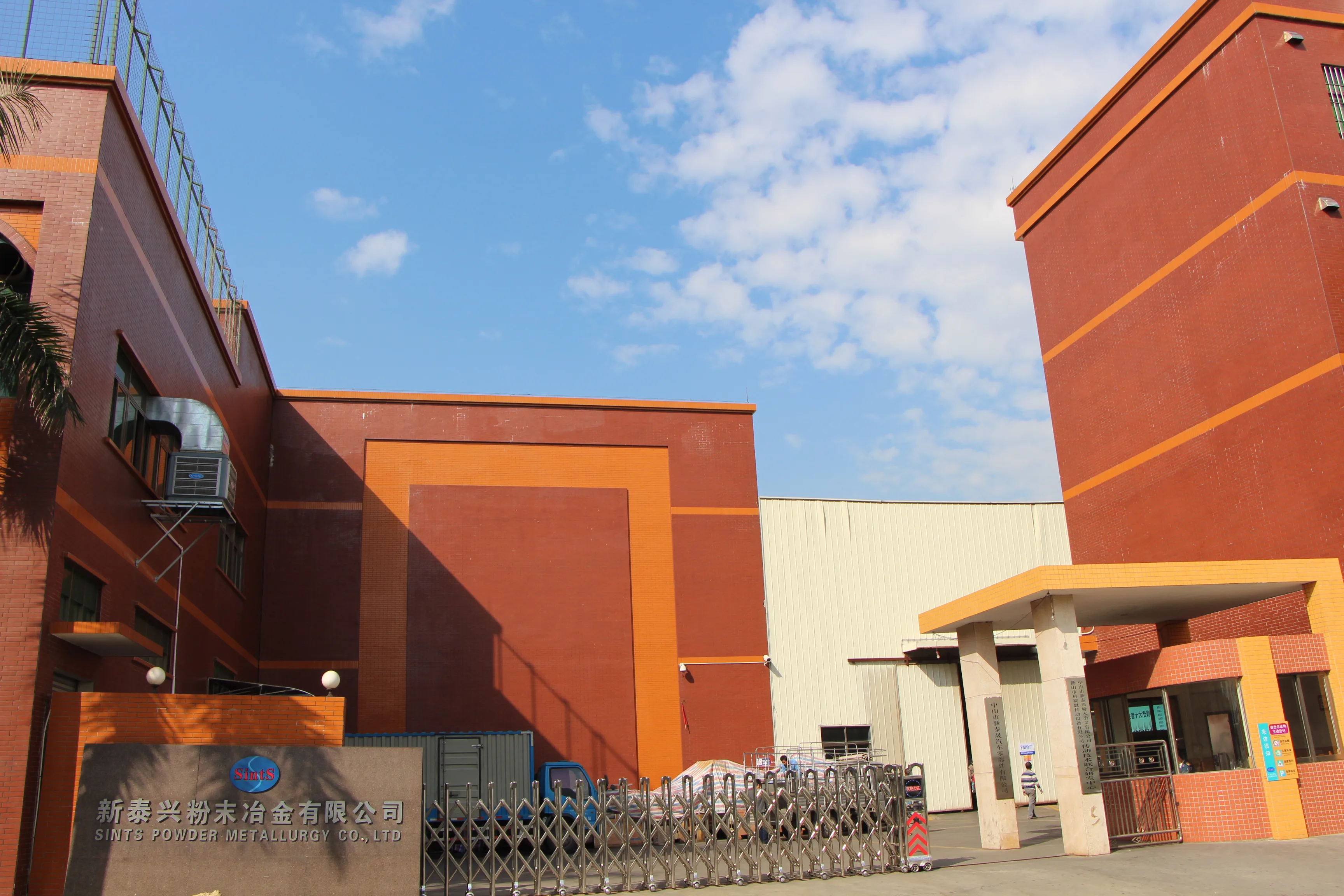
SINTS manufacturing campus in Zhongshan, Guangdong — 45,000 m²
1995
Founded
45,000
Campus Area
380+
Employees
1,200t/yr
Sintering Capacity
30+
Export Markets
Who We Are

A metallurgy company that happens to make parts

SINTS started in 1995 as a conventional powder metallurgy press shop supplying lock hardware and appliance components to the Pearl River Delta. Three decades later we still press and sinter — but the business has grown into a full sintered-metal engineering house running two parallel process families under one roof.

Conventional powder metallurgy handles axially simple, high-volume parts: gears, bushings, cams, sprockets, structural brackets. Metal injection molding handles what a press cannot: undercuts, cross holes, thin walls, complex 3D geometry at 0.1–200 g, in full-density stainless and tool steels.

Most of our customers arrive with a part that is being machined, cast, or assembled from multiple pieces — and a cost target that the current process cannot hit. Our job is to tell them, honestly, whether a sintered process will get them there.

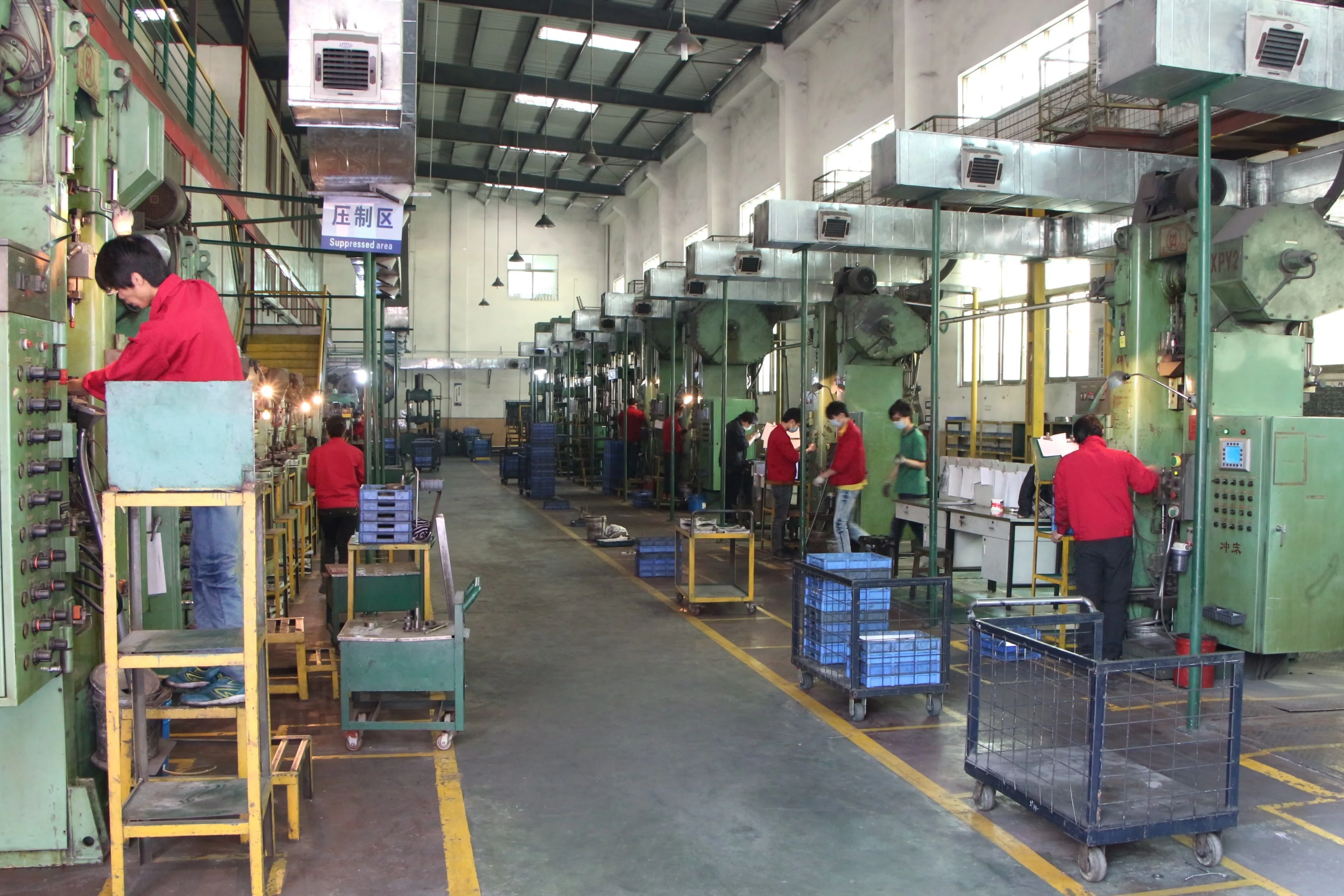
Metal injection molding hall at SINTS Zhongshan
Vertical Integration

Eight Workshops, Zero Hand-offs

Feedstock compounding, injection molding, catalytic and thermal debinding, vacuum and mesh-belt sintering, sinter-hardening, CNC turning and milling, tumbling, passivation, plating coordination, laser marking, sub-assembly and packing — all sequenced on the same site.

That matters for three reasons. Lead times stay predictable because parts never leave the campus. Metallurgical problems get traced in hours rather than weeks, because the same lab tests the powder, the green part, and the sintered part. And pricing stays transparent, because there is no chain of intermediaries adding margin to your part.

Customers routinely audit the plant in person or by live video walk-through. We will show you the sintering furnace logs and the CMM reports for your own part number.

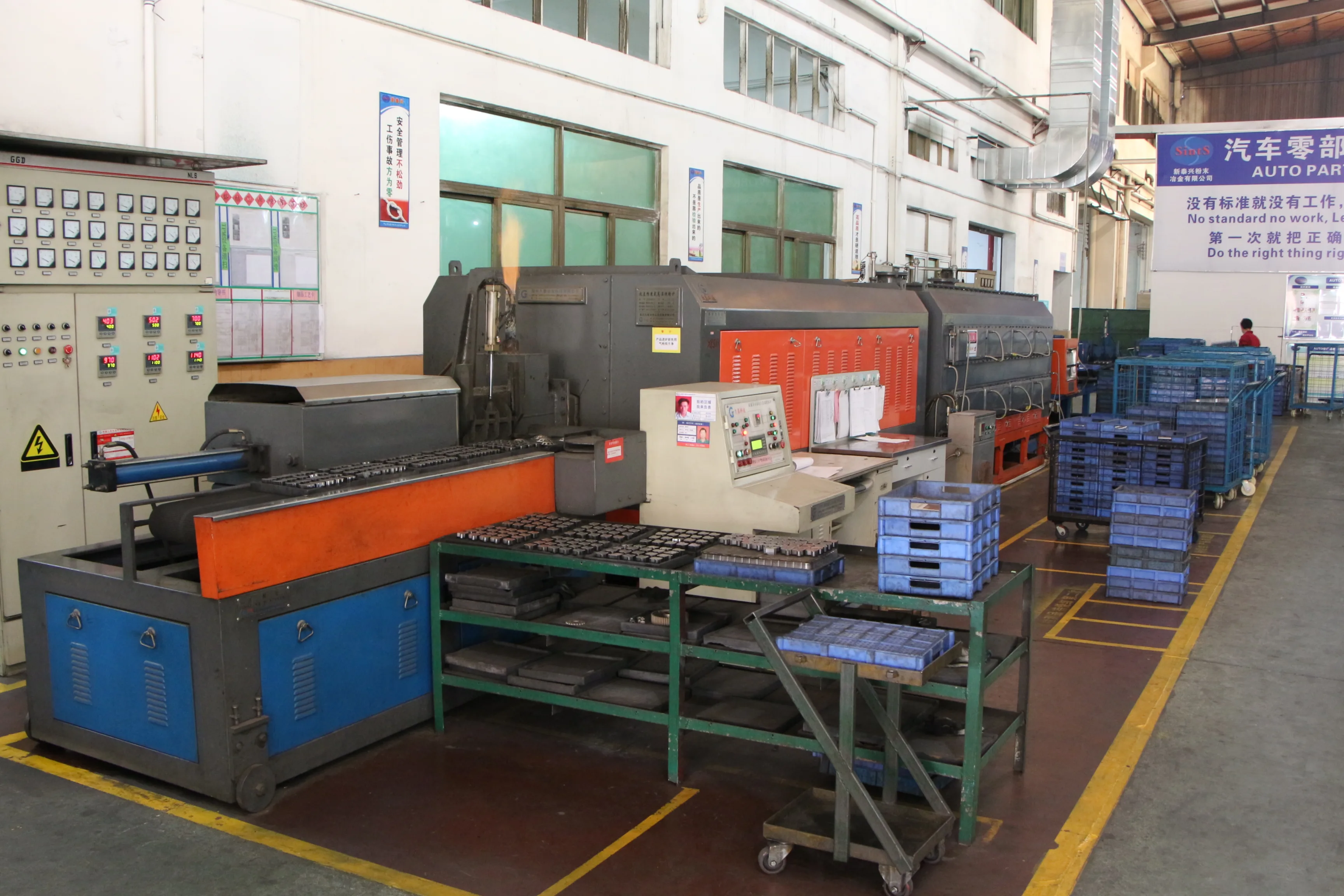
Sintering furnace line at SINTS — 1,200 tonnes per year capacity
Company Timeline

How the plant grew

Three decades of adding process capability rather than adding middlemen.

1995

Founded in Zhongshan

Established as a conventional powder metallurgy press shop serving lock hardware and household appliance manufacturers in Guangdong.

2004

Export business opens

First direct OEM shipments outside China. Export documentation, third-party inspection and English technical support introduced.

2011

MIM line commissioned

Dedicated metal injection molding hall added — feedstock compounding, catalytic debinding and vacuum sintering brought in-house.

2016

IATF 16949 certified

Automotive quality management system implemented; PPAP, FMEA, MSA and SPC added to the standard documentation package.

2019

Campus expansion

Site expanded to 45,000 m² across eight workshops, with sintering capacity raised toward 1,200 tonnes per year.

2021

Metallurgy lab upgraded

CMM, universal testing machine, metallographic microscope, Archimedes density rig and hardness testers consolidated into one lab.

2023

Sinter-hardening capability

Controlled-cooling sinter-hardening added, removing the separate quench-and-temper step for FLN2-4405 class alloys.

2026

10,000+ Part library

Sample showroom now holds over 10,000 production part references across locks, medical, appliance, power tool and automotive programs.

Scope of Supply

What SINTS actually manufactures

Two sintering routes, one finishing chain, one inspection standard.

ProcessTypical PartWeight RangeAs-Sintered TolerancePractical Volume
Metal Injection MoldingComplex 3D geometry, undercuts, thin walls, cross holes0.1 – 200 g±0.3% – ±0.5%3,000 – 5,000,000 pcs/yr
Powder Metallurgy (press & sinter)Gears, bushings, cams, sprockets, structural parts1 – 1,500 g±0.05 – ±0.1 mm10,000 – 10,000,000 pcs/yr
Sinter-HardeningLoad-bearing gears and cams needing 30–40 HRC5 – 800 g±0.08 mm50,000+ pcs/yr
CNC FinishingCritical bores, threads, sealing faces on sintered blanksDown to ±0.005 mmAny
Surface & AssemblyPassivation, plating, PVD, laser marking, sub-assemblyPer specAny

Full process data sheets: Capabilities · Grade-by-grade property tables: Material Library · Inspection and documentation: Quality System

Customers & Markets

Who we build for

OEMs and Tier-1 suppliers in 30+ countries, concentrated in five programme types.

SectorRepresentative PartsUsual MaterialVolume Profile
Lock & Security HardwareCams, clutch plates, latch bolts, cylinder components, smart-lock drive parts17-4PH, 316L, FC-0208200k – 2M pcs/yr
Medical DevicesSurgical jaws, ratchets, endoscopic linkages, dental drivers316L, 17-4PH H90020k – 300k pcs/yr
Power ToolsPlanetary gears, clutch cams, hammer components, chuck partsFLN2-4405, MIM-4605300k – 3M pcs/yr
Coffee & Home ApplianceBurr carriers, grinder cams, valve bodies, actuator arms316L, 304L, FN-020550k – 800k pcs/yr
Automotive & IndustrialSensor housings, solenoid cores, seat mechanism parts, oil pump rotorsFe-2Ni, Fe-3Si, MIM-4140100k – 5M pcs/yr
Read Conversion Case Studies →
Why Buyers Stay

Six reasons programs get re-ordered

Honest DFM, Before tooling

If your part is a poor MIM or PM candidate, we say so in the drawing review — not after you have paid for a mold. Roughly one in five enquiries gets told to stay with machining.

One campus, One owner of the problem

Because every process is in-house, there is a single point of accountability for dimensional, metallurgical and cosmetic issues. No supplier finger-pointing.

Automotive-grade discipline everywhere

The IATF 16949 system governs all production, not only automotive lines. Lock and appliance customers get the same SPC, traceability and change control.

Tooling you own

Customer-funded tooling is your property, stored under your part number, and never run for another buyer. Tool records and shot counts are available on request.

Engineers who answer email

Technical questions reach a process engineer, not a sales script. Time-zone-aware responses within one working day, in English.

Cost transparency

Quotes break out tooling, material, sintering, secondary operations and packaging. You can see exactly where a cost reduction is available at higher volume.

Engagement Model

From drawing to repeat supply

Typical new-part timeline: 5–7 weeks from approved drawing to first article.

Drawing & DFM Review

Send a 2D/3D file, target volume and material. Within 1–3 working days you get a manufacturability report: process recommendation, tolerance risks, gate and parting line proposal, and an honest go/no-go.

Quotation & Tooling

Itemised quote covering tooling, piece price at several volume breaks and secondary operations. Production tooling is cut in 25–35 working days after design freeze.

First Article & Approval

Samples in 7–10 working days after tool trial, shipped with a full dimensional report. PPAP level 1–3 packages prepared where required.

Series Production

Scheduled batches with SPC on critical characteristics, batch traceability from powder lot to shipment, and COC with every delivery.

Compliance

Certifications and declarations

Copies of all certificates are supplied with the first shipment or on request before ordering.

StandardScopeStatus
IATF 16949Automotive quality management system — design-excluded manufacture of sintered metal componentsCertified
ISO 9001Quality management system covering the full campusCertified
ISO 13485 practicesMedical-device component production controls (cleanliness, traceability, DHR)Compatible workflow
RoHS / REACHMaterial and surface-treatment substance declarationsDeclarations issued
ISO 2768 / ISO 1101General and geometric tolerancing basis for drawingsApplied
ISO 2859-1Sampling inspection by attributes — standard AQL 0.65 major / 1.5 minorApplied

Full inspection equipment list, documentation package contents and audit policy: Quality System →

Common Questions

Buyer FAQ

Is SINTS a factory or a trading company?

A direct manufacturer. Feedstock compounding, molding, debinding, sintering, heat treatment, CNC finishing and inspection are all performed on our own 45,000 m² campus. Core processes are never subcontracted, and you are welcome to audit in person or by live video.

How long has SINTS been making sintered parts?

Since 1995 — 31 years. Conventional powder metallurgy came first; metal injection molding was added as a dedicated line and now runs in parallel, sharing the same metallurgical lab and inspection standards.

Which certifications do you hold?

IATF 16949 and ISO 9001. Medical work follows ISO 13485-compatible controls. PPAP level 1–3, FAI reports, material certificates and RoHS/REACH declarations are all available.

Where do you export?

Over 30 countries, with the largest volumes in North America, Western Europe, Japan, South Korea and Southeast Asia. EXW, FOB, CIF and DDP terms are all supported.

What is the minimum order for a new customer?

3,000 pieces per production order once tooling exists. For evaluation, 20–200 prototype pieces can be produced by CNC or soft tooling before committing to a production mold.

Will you sign an NDA?

Yes — a mutual NDA before drawing review is standard. Customer drawings, tooling and geometry are confidential, and customer-funded tooling is never used for another buyer.

Start a Programme

Send a drawing. Get an honest answer.

Manufacturability feedback in 1–3 working days, including whether a sintered process is the wrong choice for your part.

Frequently Asked Questions

Practical answers for OEM sourcing and engineering teams.

When was SINTS founded?

SINTS (Zhongshan Xintaixing Powder Metallurgy Co., Ltd.) was founded in 1995 in Zhongshan, Guangdong, China.

Is SINTS a manufacturer or a trading company?

A direct manufacturer. All core processes run in-house on its own campus and are not subcontracted.

How large is the SINTS plant?

45,000 m2 with 380+ staff, 8 production workshops and about 1,200 tonnes per year of sintering capacity.

How many countries does SINTS export to?

30+, with the largest volumes to North America, Western Europe, Japan, South Korea and Southeast Asia.