
Needle / piston valves
Plungers, guides, retainers and seat carriers can create MIM or CNC opportunities, but sealing and sliding surfaces often need precision finishing.
Dispensing accuracy depends on the material, metering method, valve, nozzle, feed system and motion control working together. SINTS focuses on the reusable metal components inside valves and metering units — parts that see wear, repeated motion, chemical exposure or complex geometry.
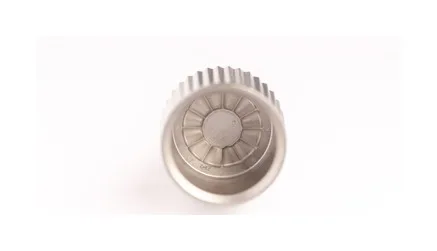
Manufacturing reference: Representative SINTS components are shown to illustrate compact mechanisms, bushings and drive geometries relevant to dispensing and metering reviews. Fluid exposure, wear, cleanliness, tolerances and critical interfaces are evaluated from the actual project requirements.
The handbook separates feed, metering, valve, tip/nozzle, motion and control. SINTS opportunities are strongest inside metering and valve modules, where reusable metal parts move repeatedly and interact with abrasive, viscous or reactive materials.
Plungers, guides, retainers and seat carriers can create MIM or CNC opportunities, but sealing and sliding surfaces often need precision finishing.
Gears, couplings, bushings and drive hardware see continuous wear; filled pastes can make material and surface choices critical.
Pistons, rods, sleeves, drive parts and compact carriers may combine high repeatability with demanding clearances.
Tappets, plungers, guides and spring seats operate at high cycle rates. Micro-nozzles and orifices should not be treated as default MIM parts.
| Component | Function | First route to evaluate | Why / watchout |
|---|---|---|---|
| Feature-rich plunger / tappet | Valve actuation / jetting | MIM + finish / CNC | Integrated geometry can favor MIM, while sliding diameters, impact faces and straightness may still require machining or grinding. |
| Simple piston / rod | Positive-displacement metering | CNC / turning / grinding | Axisymmetric geometry with demanding fit and surface finish usually favors precision machining. |
| Guide / seat carrier / body insert | Locates motion or sealing elements | MIM + critical finishing | Complex ports, pockets or integrated features can favor MIM; sealing bores/faces should be finished to function. |
| Auger drive gear / coupling | Transfers motor torque | PM / MIM / gear process | Volume, tooth load, abrasive paste, wear and required backlash define the route. |
| Bushing / sleeve | Supports rotating / oscillating drive parts | PM / turned bushing | PM is strong for many repeat-volume bushings; lubrication, filler abrasion and chemical exposure matter. |
| Lever / cam / retainer | Actuation / clamping / return | MIM — high potential | Small 3D geometry with repeated volume is a natural MIM screening target. |
| Micro nozzle / precision orifice | Forms final droplet / jet | Micro-machining / EDM / laser / specialty process | Do not default to MIM; hole geometry, roughness, concentricity and wear can dominate performance. |
| Thin bracket / guard | Mounting / protection | Stamping / sheet fabrication | Simple thin geometry usually belongs to conventional sheet processes. |
SINTS component examples illustrate manufacturing geometry and process options. Final application suitability is assessed from your drawing and operating requirements.
Useful for discussing integrated teeth, drive features and compact MIM geometry. Actual suitability depends on fluid exposure, wear, cleanliness and the critical interfaces that still need finishing.
SINTS manufacturing reference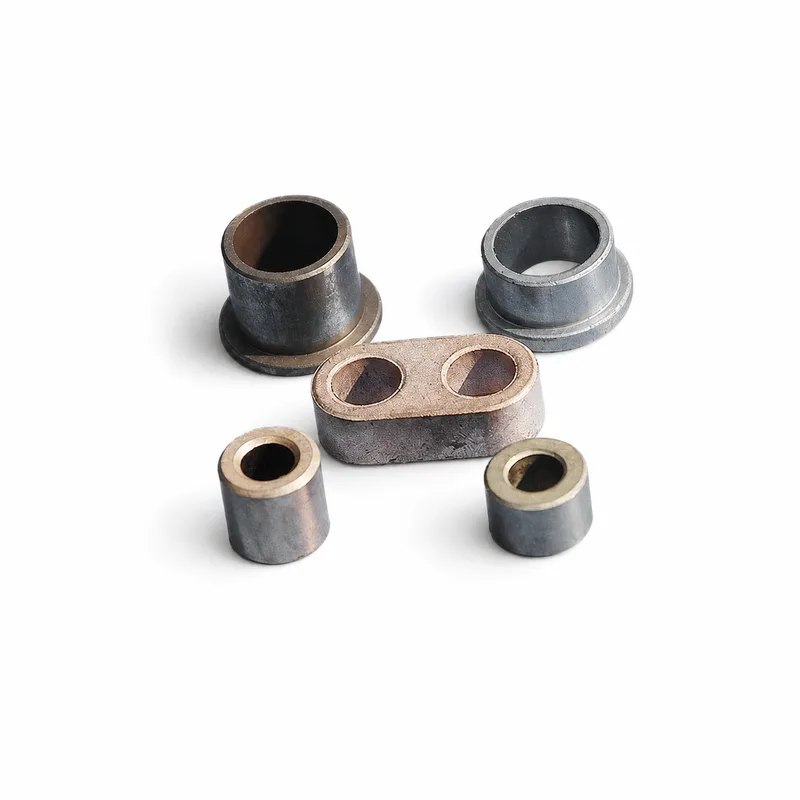
Relevant to pivots, guides and support interfaces where load, lubrication, clearance, density and wear make PM worth evaluating.
SINTS manufacturing reference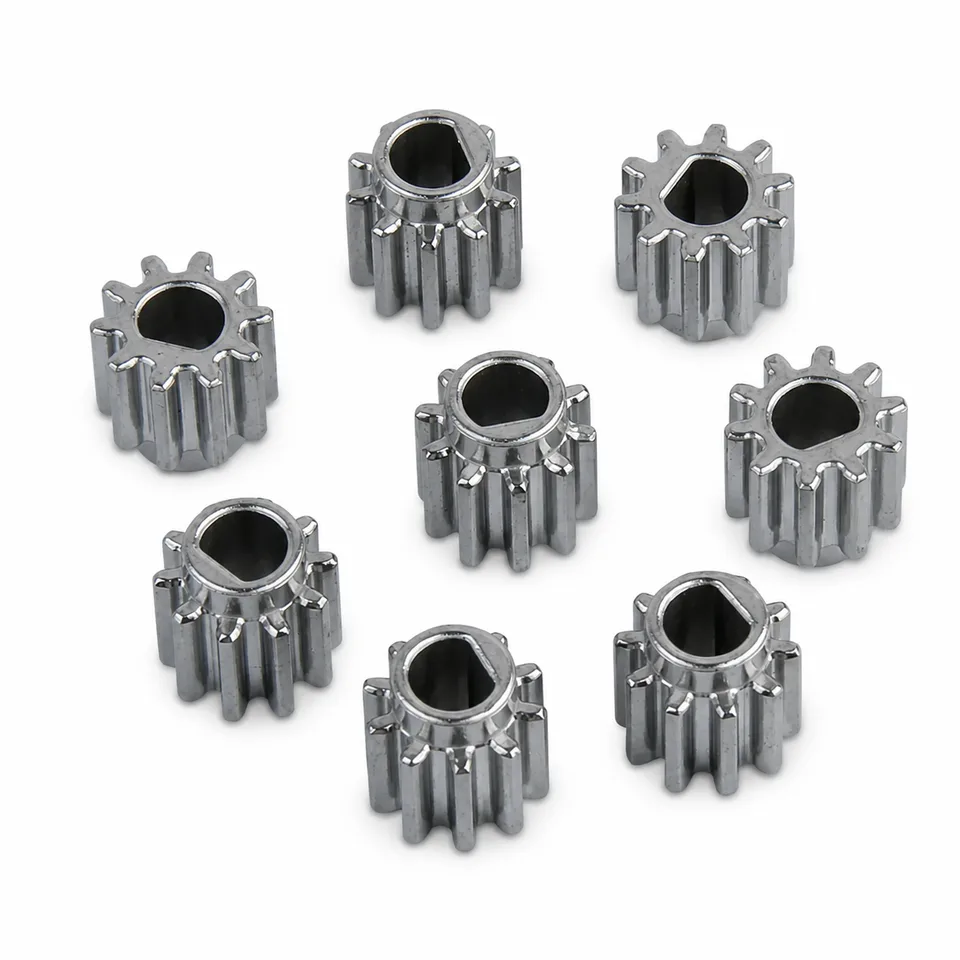
Useful for auger, screw-drive or actuator discussions where tooth load, backlash, wear, noise and repeat-volume economics matter.
SINTS manufacturing referenceCompact plungers with integrated features, carriers, seat bodies, levers, cams, spring seats and complex small valve hardware.
Bushings, gears and press-friendly repeated-volume drive components.
Piston/rod fits, precision bores, sealing faces, micro-nozzles, orifices and interfaces where surface or geometric accuracy drives dispensing performance.
Material type, viscosity range and test temperature.
Particle size, hardness and solids content if relevant.
Shot size, flow rate, line width or droplet requirement.
Dispense rate, jetting frequency and target life.
Needle, piston, diaphragm, auger, positive displacement or jetting.
Critical slide fits, sealing faces, ports, bores, nozzles and datums.
Use this application guide for fluid, particles, wear, cycle rate, cleanliness and metering context. Use Product family pages for the component-level manufacturing decision.
Valve-adjacent, nozzle, plunger, seat-carrier and metering-interface parts where leakage, flow, wear and chemical compatibility matter.
Product family →Reciprocating and guided-motion parts where straightness, fits, surface finish and secondary machining may dominate.
Product family →Levers, carriers, ratchets, stops and compact motion-transfer parts around dispensing actuators and pumps.
Product family →Small drive components used around auger, screw or actuator systems where tooth quality, wear and backlash matter.
Product family →Support and bearing interfaces where compaction, density, sizing, lubrication and wear can make PM attractive.
Product family →Compact carriers, inserts, brackets and interfaces that combine small size with controlled datums and assembly features.
Product family →Dispensing, dosing and metering equipment uses small precision metal parts for fluid control, actuation and adjustment. These answers cover process selection, tolerance framing and the inputs that make a DFM review useful for these components.
Small feature-rich carriers, seat bodies, levers, cams, spring seats and some complex plungers are worth evaluating. Sliding and sealing surfaces may still need secondary finishing.
Not by default. Micro-orifice size, roundness, concentricity, surface finish and wear can make precision machining, EDM, laser drilling or specialty materials more appropriate.
Repeat-volume bushings, gears and press-compatible drive components are common screening targets, especially in auger or metering-drive modules.
Fluid type, viscosity, filler content, shot/flow target, cycle rate, valve type, material, chemical exposure, critical surfaces, drawing and annual volume should be included.
It covers the hardware that controls a measured quantity of fluid — valve spools, plungers, needles and nozzles, metering rods, cams, followers, adjustment screws and the small motion parts inside a pump or valve module. The category spans adhesives, lubricants, medical and laboratory dosing, industrial dispensing and food or beverage post-mix equipment, so the working fluid rather than the machine type usually defines the component requirements.
Specify tolerance by function, not as one blanket number on the drawing. An orifice diameter, a sealing seat or a metering stroke may drive the whole performance and deserve a tight, explicitly toleranced callout, while mounting bosses and clearance surfaces can be looser. A generic ± value applied across a part often makes the tight features ambiguous and the loose ones needlessly expensive to inspect.
MIM stops being attractive when the part is essentially an axisymmetric body with one or two turned features and no complex 3D geometry — that is usually faster and cheaper as bar-stock turning. It also stops when annual volume does not justify tooling, or when a functional surface such as a valve seat or sealing face is better achieved by machining and remains a finishing operation anyway. The geometry has to add complexity that near-net shaping actually removes.
Chemical compatibility, viscosity, temperature range, whether the fluid cures or crystallises, and whether abrasive or filled media is used all change the material and surface decision. A fluid that hardens in place favours cleanable geometry and corrosion-resistant stainless, while a filled or abrasive medium shifts attention to wear surfaces. Stating the fluid and its behaviour is more useful at quoting stage than naming a grade.
We can review where MIM or PM can simplify geometry, and where precision machining or specialty finishing should remain.