
Keg coupler hardware
Probe/stem, lever/linkage, check-valve cage, retainers and small locking parts combine motion, corrosion and repeated service cycles.
Draft-beer and beverage systems combine pressurized fluid control, mechanical interfaces, cleaning requirements and repeated user actuation. SINTS focuses on the small stainless and functional metal parts inside faucets, couplers, check valves, fittings, flow-control mechanisms and compact dispensing hardware.
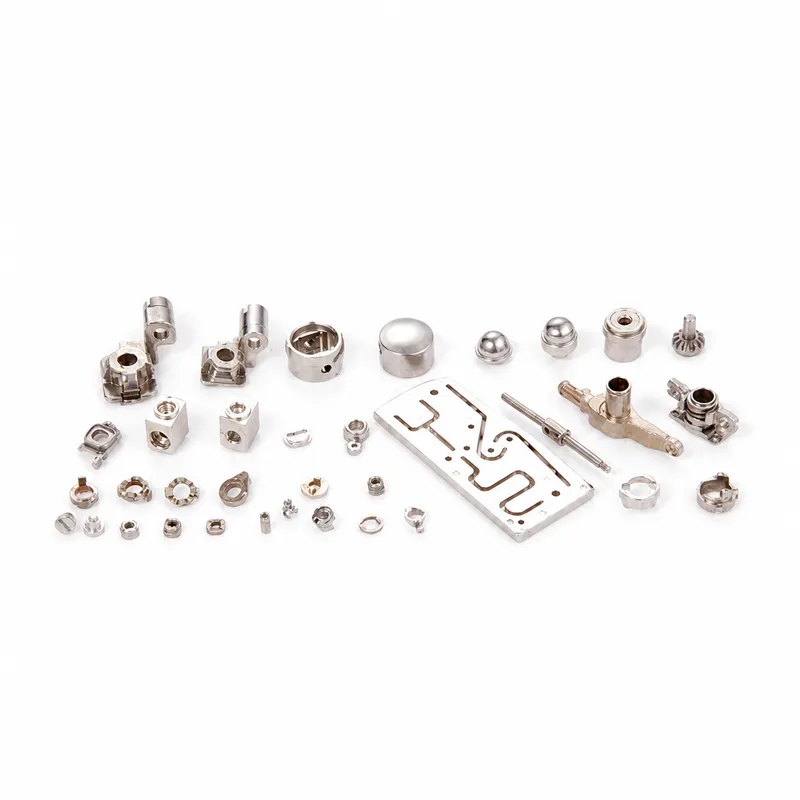
Manufacturing reference: Representative SINTS components are shown to illustrate stainless, valve-style and compact mechanism geometries relevant to beverage-dispensing reviews. Material, media-contact, cleaning, leakage and surface requirements are evaluated project by project.
In a draft system the chain includes gas regulation, keg interface, product line, shank/tower and faucet. Post-mix systems add proportioning, manifolds and valve modules. Small metal parts matter because one leaking, sticking or hard-to-clean component can stop the system.
Probe/stem, lever/linkage, check-valve cage, retainers and small locking parts combine motion, corrosion and repeated service cycles.
Levers, followers, seat carriers, flow-control cams and rockers are compact parts where feel, wear, sealing and cleanability interact.
Stems, cages, collets, carriers and small inserts require consistent assembly, corrosion resistance and reliable sealing interfaces.
Valve spools, levers, metering/actuation hardware and sensor-interface metal parts may create MIM or CNC opportunities in higher-volume equipment.
| Component | Function | First route to evaluate | Why / watchout |
|---|---|---|---|
| Lever / follower / rocker | User actuation / valve motion | MIM — high potential | Small 3D geometry, pivots and repeated volume can make MIM attractive; contact wear and feel still matter. |
| Flow-control cam / compact linkage | Adjusts restriction / motion | MIM / CNC | Complex profile and integrated features favor MIM; low volume or extremely tight profile accuracy may favor machining. |
| Probe / stem | Opens keg valve / establishes flow path | CNC / turning or MIM + finish | Axisymmetric sealing and flow surfaces often need machining; integrated geometry can make a near-net-shape preform worth evaluating. |
| Seat carrier / valve insert | Locates seal / fluid port | MIM + critical finishing | MIM can integrate features, but sealing face, bore and cleanable flow surfaces must meet functional finish requirements. |
| Check-valve cage / retainer | Retains seal / prevents reverse flow | MIM / stamping / CNC | 3D cage geometry may favor MIM; thin simple retainers may be better stamped. |
| Small threaded fitting / shank insert | Connection / service interface | CNC / turning / MIM + thread finish | Thread quality, sealing, corrosion and cleaning drive the route. |
| Large faucet body / tower / manifold | Main fluid body / enclosure | CNC / forging / casting / fabrication | Usually not a MIM/PM priority due to size, flow-path and finishing economics. |
| Seal / gasket / hose | Fluid sealing / transfer | Elastomer / polymer process | Not a SINTS MIM/PM target. |
The current SINTS material data includes stainless grades such as MIM 316L and MIM 304. Final material, passivation/polishing, food-contact documentation and cleaning compatibility should be confirmed against the customer's drawing and destination-market requirements.
Beer, acidic beverages, syrups, water and cleaning agents create different corrosion and residue challenges.
Flow and sealing surfaces may need machining, polishing or other finishing even if the primary geometry is MIM.
Geometry should avoid trapped product where cleaning cannot reach effectively.
Threads, latches, couplers and service interfaces must survive cleaning and maintenance cycles without losing fit.
SINTS component examples illustrate manufacturing geometry and process options. Final application suitability is assessed from your drawing and operating requirements.
Useful for discussing compact stainless housings, inserts, shafts, carriers and interface components. Beverage contact and cleaning suitability remain project-specific.
SINTS manufacturing reference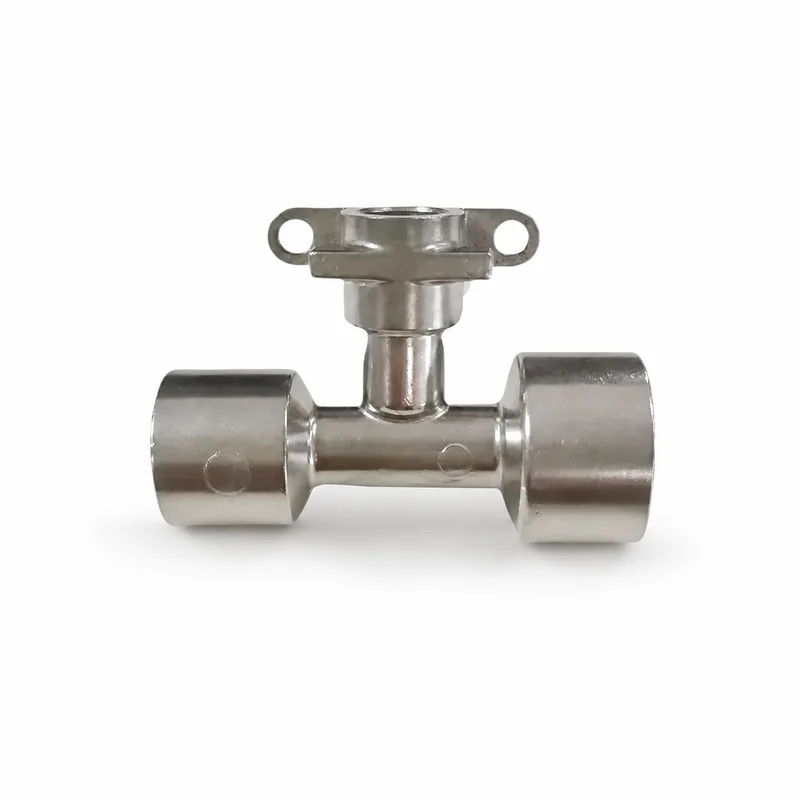
Useful for flow-control discussions involving valve-style geometry, sealing interfaces, surface finish, media compatibility and cleaning requirements.
SINTS manufacturing reference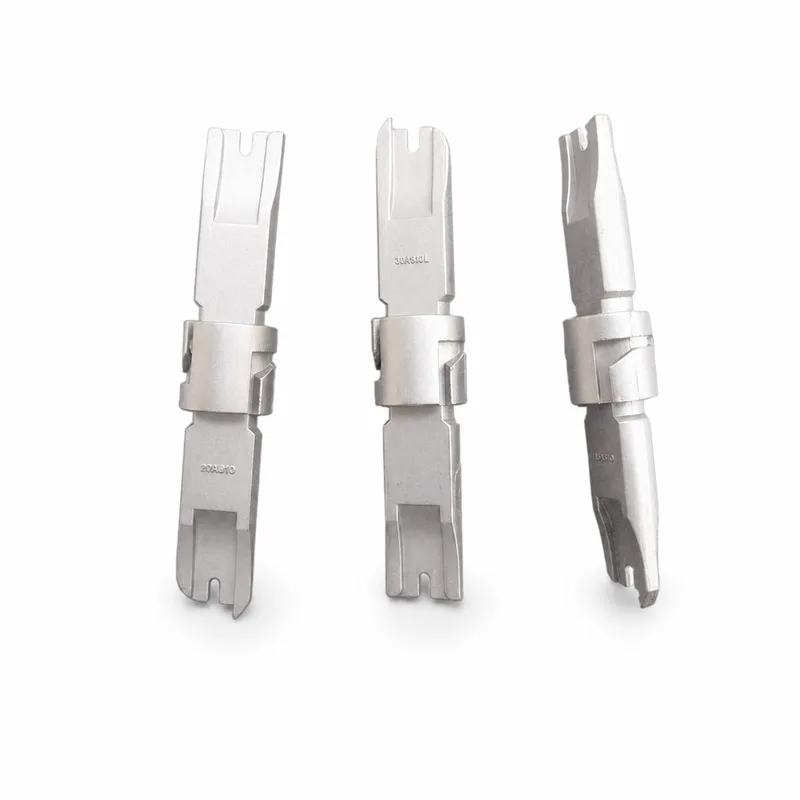
Useful for linkage, latch, retainer or actuator geometry where feature integration may reduce machining setups. Beverage-contact use is not implied.
SINTS manufacturing referenceInclude flow passages, seals, threads, pivots, datums and surfaces that contact beverage or cleaning fluid.
Beer, water, syrup, carbonated beverage, gas-side service or another medium.
Cleaning chemistry, temperature and service/disassembly expectations.
Working pressure, test pressure and allowable leakage where relevant.
Current stainless grade, passivation/polish requirement and any food-contact documentation required by the customer.
Volume and product life determine whether MIM tooling provides a meaningful economic benefit.
Use this application guide for media contact, cleaning, leakage, corrosion and disassembly context. Use Product family pages for the component-level manufacturing decision.
Valve-adjacent, seat-carrier, plunger, nozzle and flow-interface parts where leakage, corrosion, cleaning and finishing matter.
Product family →Links, latches, levers, cams and retainers used around couplers, faucets and dispensing actuators.
Product family →Moving and locating interfaces where fit, sliding surface, straightness and secondary finishing may dominate.
Product family →Compact inserts, carriers, brackets and interfaces for dispensing assemblies and accessory mechanisms.
Product family →Small drive components for automated or smart dispensing hardware where wear, backlash and duty cycle matter.
Product family →Drawing-led beverage hardware that needs material, process, surface and compliance review before categorization.
Product family →Draft-beer and beverage dispensing hardware covers the small stainless and functional metal parts inside faucets, couplers, check valves, fittings and flow-control mechanisms. These answers cover the questions engineering and sourcing teams ask when screening those parts for MIM, powder metallurgy or machining.
Compact levers, followers, flow-control cams, check-valve cages, retainers and feature-rich seat carriers are common screening targets when annual volume supports tooling.
Potentially, but suitability depends on the exact material, surface condition, porosity/density requirements, cleaning method, corrosion exposure, finishing and the customer's applicable food-contact requirements. It should not be assumed from process name alone.
Usually they are not the first MIM target. Larger flow bodies often favor machining, forging, casting or fabrication, while smaller internal mechanism parts are more attractive for MIM.
The current SINTS MIM material list includes 316L and 304 among its stainless grades. Final material and documentation must be confirmed for the specific beverage and market requirement.
Beverage dispensing hardware is the fluid-path and actuation hardware between the gas or product source and the outlet — keg couplers, faucet and tap mechanisms, fittings, check valves, flow-control parts and the small levers, cages, stems and retainers inside them. It covers draft-beer systems, post-mix and smart-dispense equipment and the compact mechanisms that repeat the same motion thousands of times.
Stainless steel grades are the usual starting point because corrosion resistance and cleanability drive most of the decision — 316L is the common reference grade, with 304 used where less aggressive media and cleaning apply. The final grade depends on the media, cleaning chemicals, residence time and the customer's own food-contact requirements, so it is confirmed per project rather than assumed from the drawing.
Cleanability is a geometry requirement, not only a material one. Crevices, blind holes, trapped volumes, sharp internal corners and rough as-sintered surfaces all hold residue and are difficult to flush, so a part that passes a dimensional check can still fail a cleaning or hygienic review. Where that matters, the drawing should state the cleaning method so surface condition, corner radii and any required finishing are evaluated together.
Send the drawing, the material being dispensed, cleaning and sanitising method, corrosion and media-contact expectations, sealing and leakage requirements, critical interfaces, annual volume and any target cost driver. Those inputs determine whether MIM, PM, CNC turning or a hybrid route is worth evaluating — and they usually reveal that two or three internal parts, not the whole assembly, are the real candidates.
We can review where MIM may simplify compact stainless hardware, and where CNC, forging, casting or precision finishing should remain.