
Strong candidate
Repeat production, complex geometry, high machining content and a limited number of truly critical dimensions.
Three notes are real-part reviews built from actual drawings or quotation records, anonymised at the customer's request. Three are illustrative engineering reviews. No achieved cost, yield or delivery result is claimed in any of them.
Each note starts from a different bottleneck and shows what has to be checked before a route is changed — geometry, material, density, tolerances, volume and validation.
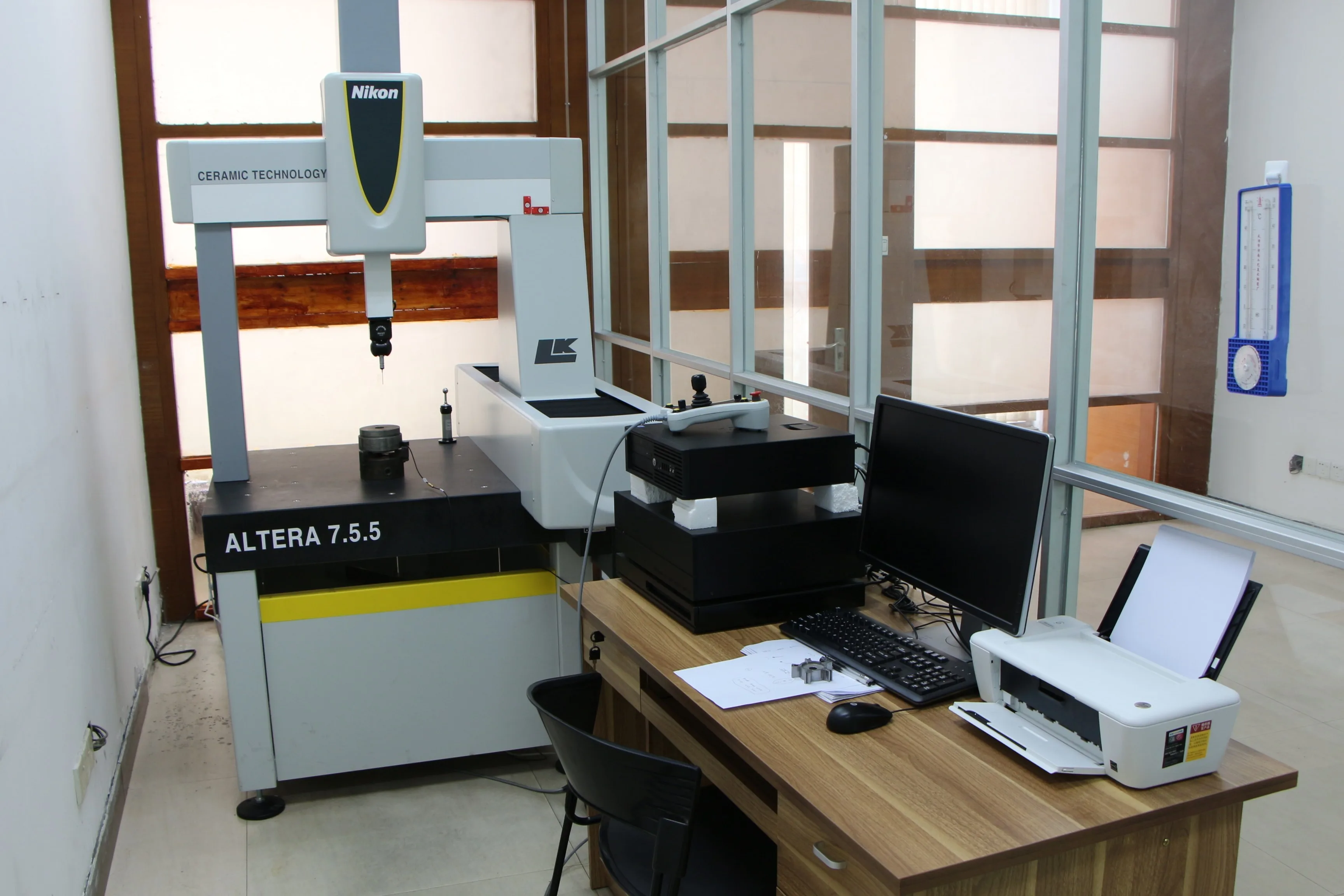
The point is not that MIM or PM always wins. Each example starts with a different bottleneck and shows what must be checked before changing the route.
From a real quotation for a hardened blade: why a cryogenic step and a double temper sit behind HRC 48-52, and why the edge specification has to be measured after the polish, not before.
Read case note →From a real quotation for a 1.2 g MIM structural part: what the aging condition decides, where distortion lands, and why 17-4PH is magnetic where 316L is not.
Read case note →Based on an actual drawing at 73,560 pcs a year: why density at ≥7.0 g/cm³ decides whether the M18×1 thread can be rolled, and the three drawing callouts that moved the route and the price.
Read case note →When complex profile, repeat volume and selective critical dimensions may justify moulding most features and finishing only what matters.
Read case note →How serrations, undercuts, surface condition and alignment requirements affect a MIM-versus-machining decision.
Read case note →How density, tooth loading, hardness and secondary operations shape the shortest qualified production route.
Read case note →Repeat production, complex geometry, high machining content and a limited number of truly critical dimensions.
The part has a mix of mouldable/sinterable features and a few surfaces that can be finished after sintering.
Prototype or low volume, frequent design changes, large geometry, or a drawing dominated by tight tolerances everywhere.
Practical answers from the drawing review, not from a brochure.
Each note is based on an actual quotation or production review, rewritten so that no customer, drawing number or price is identifiable. Dimensions, alloys and acceptance requirements are kept, because those are what the decision turned on.
Because a route decision is only credible if it can also say no. Several notes close with the conditions under which the part stays on CNC, and those conditions are the part a reader can apply to the next project.
By the manufacturing question rather than the industry — a heat-treatment window, a density requirement, access to serrations, or a conversion away from machining. Each note states its question in the first paragraph.