
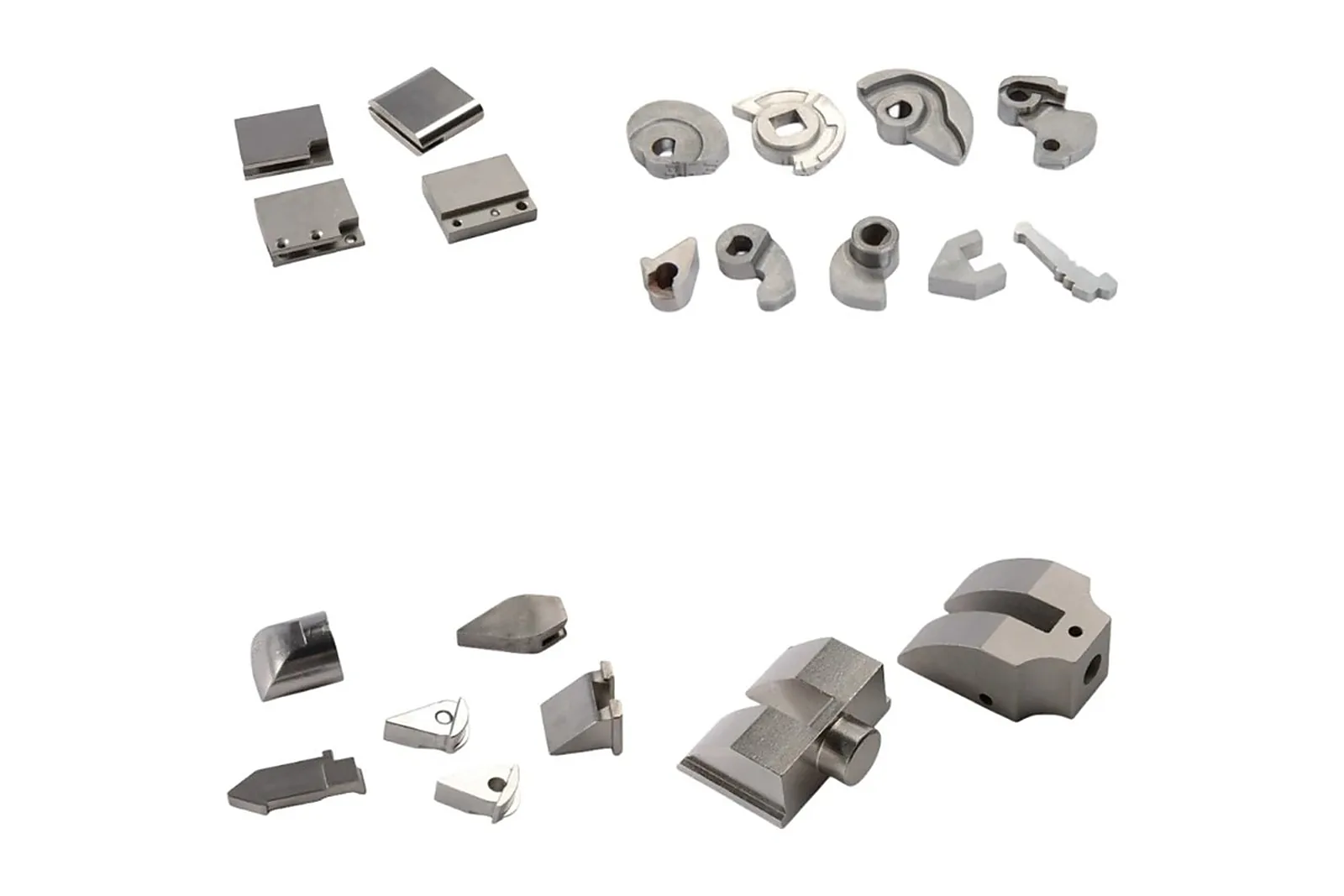
A quotation request is not a formality. It is the input to a manufacturing decision, and the quality of the answer is bounded by the quality of the question. An RFQ that lists a part name and a quantity will produce a price, but it will not produce a recommendation — and the price will carry a wide contingency because the supplier has to assume the worst on volume, tolerance and finish.
Seven fields close most of that gap. None of them takes long to supply, and each one changes what the supplier can commit to.
Why a complete RFQ matters
Suppliers handle uncertainty by adding contingency. If annual volume is unknown, the quotation assumes a low figure and the unit price rises. If the finish is undefined, the price assumes the more expensive option. If the tolerance on a feature is unclear, the price assumes it must be machined.
This is not defensiveness; it is the only rational way to quote an underspecified part. The practical consequence is that an incomplete RFQ does not produce a lower price, it produces a higher one — and then a second round of negotiation once the details emerge.
The seven fields below are the ones that close the largest gaps.
1. Drawing and geometry
Send a 2D drawing with tolerances, datums, surface requirements and a title block identifying the revision. Add a 3D model where available, ideally STEP, because it lets the supplier assess wall thickness, draft and feature accessibility directly rather than inferring them from projections.
Where a drawing does not exist — a reverse-engineered part, or a component being transferred from an existing supplier — say so explicitly. A supplier who knows the part is being reverse engineered will ask different questions, and will handle the datum scheme differently.
Two details are worth checking before sending: that the drawing revision is the current one, and that every dimension carries a tolerance, either individually or through a general tolerance note. Drawings with untoleranced dimensions force the supplier to guess, and guesses become disputes at first article.
2. Material requirement
Name the grade where it is fixed. Where the grade is open, state the performance requirement instead: corrosion environment, load and duty, wear expectation, magnetic behaviour, temperature, or a regulatory reference. A supplier can select a grade from a requirement; it cannot from a blank field.
Add the properties that are not implied by the grade name. In sintered parts, density and heat treatment are the two that most often decide whether the component performs — and neither is captured by writing "316L" or "17-4PH" on a drawing.
The single most useful material line in an RFQ: "316L, 95% minimum density, passivated, part sees alcohol-based cleaning daily." It names the grade, the density floor, the finish and the service condition in one sentence — and it lets the supplier confirm fit rather than price a guess.
3. Volume and program life
These two fields drive the tooling decision, and therefore the unit price. Supply: the expected annual quantity, any expected ramp, the intended program life, and whether the volume is firm or forecast.
A supplier comparing a forming route against machining needs to divide tooling cost by per-part savings and check that the result arrives inside the program. Without volume and life, that calculation cannot be done, and the quotation will default to a conservative assumption.
It is also worth stating how the volume is structured. A steady 5,000 units a year is a different proposition from one order of 15,000 followed by nothing, even though the totals are comparable. Production planning, tooling amortisation and even the choice of process can all turn on that distinction.
4. Tolerance structure
A drawing that applies a uniform tight tolerance across every dimension will be quoted as a machining job, because that is what it is. A drawing that distinguishes critical features from general ones will be quoted as a forming route with a finishing operation, which is frequently much cheaper.
Structure the drawing in three tiers: critical features that carry function (fits, bores, sealing faces), significant dimensions that affect assembly, and general dimensions covered by a tolerance note. Also state the datum scheme, so measurement is unambiguous at first article.
Where a tolerance exists for historical reasons rather than functional ones, say so. Suppliers are often in a position to suggest a relaxation that reduces cost without affecting the part's function — but only if they know it is negotiable.
5. Surface finish and appearance
Distinguish between surfaces that are functional and surfaces that are visible. State roughness values or a reference component where function matters; state the appearance requirement and the lighting or inspection condition where cosmetics matter.
Also state which surfaces must not be damaged. A part that will be handled by a customer-facing assembly step may need protective packaging that bulk tumbling would not require, and that affects cost as well as the process.
6. Application and service conditions
A short paragraph about what the part does is disproportionately valuable. It tells the supplier whether corrosion, wear, fatigue, magnetic response or cleanliness is the governing requirement — and that determines material, heat treatment and finish more reliably than a specification list.
Include the failure consequence if it is material: does a dimensional deviation cause a leak, a jam, a safety issue or a cosmetic complaint? That single sentence often explains why a specific tolerance is tight, and it helps the supplier decide which features must be inspected in production.
7. Sampling and project stage
State where the project stands. A prototype needs speed and no tooling; a pilot build needs parts in the intended material so performance data is representative; a production program needs the lowest landed unit cost and a tooling plan that can survive a design change.
Also state what documentation is required: a dimensional report, material certificate, density and hardness data, or a full approval package. Asking for these at the first article stage is straightforward; assembling them retrospectively is not.
RFQ checklist
| Field | What to send | What it changes |
|---|---|---|
| Drawing | 2D drawing with tolerances, datums, revision | Manufacturability assessment; whether the part can be formed at all |
| Model | STEP or equivalent | Wall thickness, draft and feature analysis |
| Material | Grade, or the performance requirement | Process route, heat treatment, finishing |
| Properties | Density, hardness, magnetic requirement | Process window and verification method |
| Volume | Annual quantity, ramp, structure | Whether tooling can be amortised at all |
| Program life | Expected years in production | Tooling payback; process recommendation |
| Tolerance tiers | Critical versus general features | Forming plus finishing, versus machining |
| Finish | Functional roughness and appearance requirement | Secondary operations and packaging |
| Application | Function, service environment, failure consequence | Material and finish selection; inspection plan |
| Stage | Prototype, pilot or production | Speed versus unit cost; tooling timing |
| Documentation | Reports and certificates required | Inspection scope and records |
Let the supplier challenge the brief
A good supplier will push back. If the drawing specifies a uniform tight tolerance, expect a question about which features actually matter. If the material is over-specified for the service condition, expect an alternative. If the volume does not support the geometry, expect a recommendation to stay on the current process.
Invite that. A supplier that accepts every specification without comment is either not reading the drawing or not in a position to advise. The value of an experienced manufacturing partner is precisely that it can see the cost consequences of a design decision before the tooling is cut — but only when it has enough information to reason about.
Conclusion
Seven fields, none of them difficult to supply: drawing, model, material requirement, volume and program life, tolerance structure, finish, and application context. Together they turn a quotation from a price into an engineering recommendation, and they usually produce a lower price as a side effect, because the supplier no longer has to price uncertainty.
Where a field genuinely is unknown — the volume is a forecast, or the material is still open — say so and say why. A supplier who knows which variables are loose can propose options; a supplier who assumes everything is tight can only quote high.
Related component families
These pages cover the programs where RFQ quality most affects the outcome.
Custom OEM Components
Drawing-based programs where the route is chosen per part.
Component guide →Component Design Notes
Feature-by-feature notes that help structure a drawing before it is sent.
Component guide →Precision Small Components
Where tolerance structure decides the process chain more than geometry does.
Component guide →Send a Drawing
Submit a drawing and requirement set for a manufacturability review.
Start an RFQ →Have a drawing to discuss?
Send it to our engineering team. We review process fit and identify the information needed for a quotation.
Send Drawing for Review