
Wheel drive & gearbox
Low-speed, high-torque motion creates opportunities for gears, output shafts, hubs, bushings and thrust parts. Frequent reversing, stall torque and slope operation increase wear and impact demands.
Robotic mowers combine low-speed drive, gear reduction, cutting-height adjustment, charging and outdoor-protection functions. The first metal parts worth screening are usually gears, bushings, shafts, hubs and compact adjustment or wear components where torque, noise, corrosion and repeatability influence the manufacturing route.
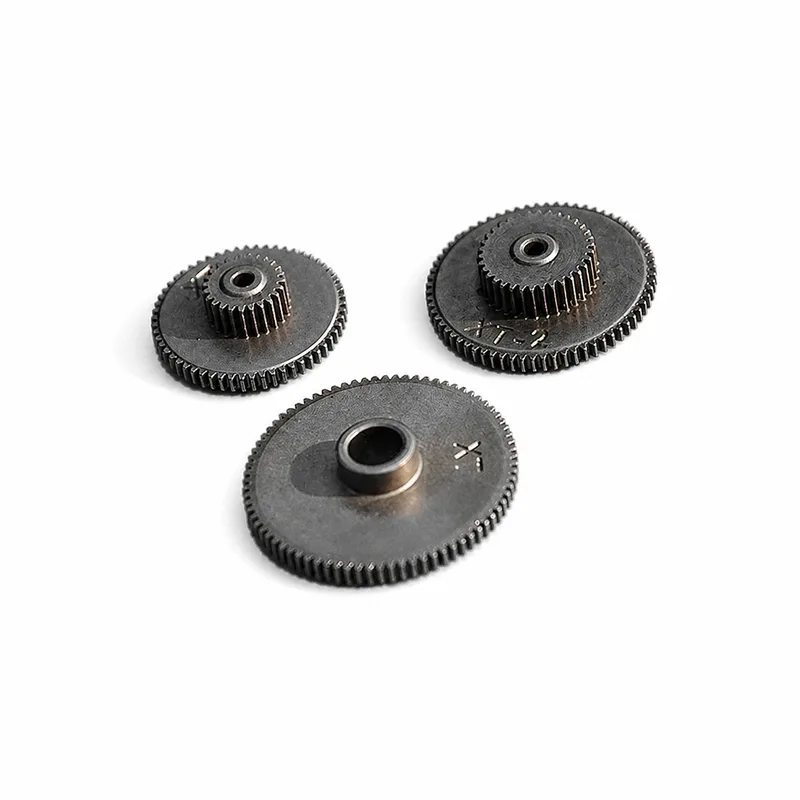
Manufacturing reference: Representative SINTS components are shown to illustrate gear, bushing and shaft geometries relevant to robotic-mower engineering reviews. Final suitability depends on load, noise, corrosion, tolerances and the actual drawing.
The SINTS technical handbook breaks the machine into navigation, motion control, cutting, energy, safety and structural/environment systems. The metal-part opportunities are concentrated mainly in drive, cutting-height adjustment, charging and durable outdoor mechanisms.
Low-speed, high-torque motion creates opportunities for gears, output shafts, hubs, bushings and thrust parts. Frequent reversing, stall torque and slope operation increase wear and impact demands.
Adjustment gears, small shafts, lock features, detents and compact carriers may favor near-net-shape production when geometry and repeat volume justify tooling.
Contacts, retainers, spring seats and corrosion-resistant small parts may need stable geometry and outdoor surface protection.
Water, mud, grass, fertilizer, impact and temperature cycles mean corrosion, sealing, drainage and contamination are part of the manufacturing decision.
| Component | Function | First route to evaluate | Why / watchout |
|---|---|---|---|
| Spur / planetary gear | Wheel or height-adjustment reduction | PM — high potential | Repeat-volume gears are a core PM opportunity; tooth load, density, noise and hardness define the final route. |
| Compact complex gear / cam | Adjustment or locking mechanism | MIM / PM / gear process | 3D complexity may favor MIM; pressing direction may favor PM; tooth quality and contact surfaces still matter. |
| Output shaft | Transfers motor/gearbox torque | CNC / turning + heat treatment | Simple rotational geometry, bearing seats and runout often favor machining; a near-net-shape preform only helps if geometry is more complex. |
| Bushing / sleeve | Supports rotating or sliding elements | PM — often strong | PM is a natural route for many repeat-volume bushings; lubrication, density, load and corrosion requirements decide the material system. |
| Hub / compact carrier | Connects drive or adjustment elements | PM / MIM + machining / CNC | Geometry, section thickness, splines, datums and volume determine whether near-net-shape helps. |
| Small latch / detent / spring seat | Locks or indexes adjustment mechanisms | MIM / stamping / CNC | Complex compact geometry can make MIM attractive, but simple sheet or turned parts should stay with simpler processes. |
| Large housing / blade disc | Structural enclosure or cutting support | Casting / stamping / CNC / polymer process | These are generally not natural MIM/PM targets because of size, material or structural form. |
SINTS component examples illustrate manufacturing geometry and process options. Final application suitability is assessed from your drawing and operating requirements.
Relevant to repeat-volume reduction discussions where tooth load, density, noise, backlash and finishing must be evaluated together.
SINTS product reference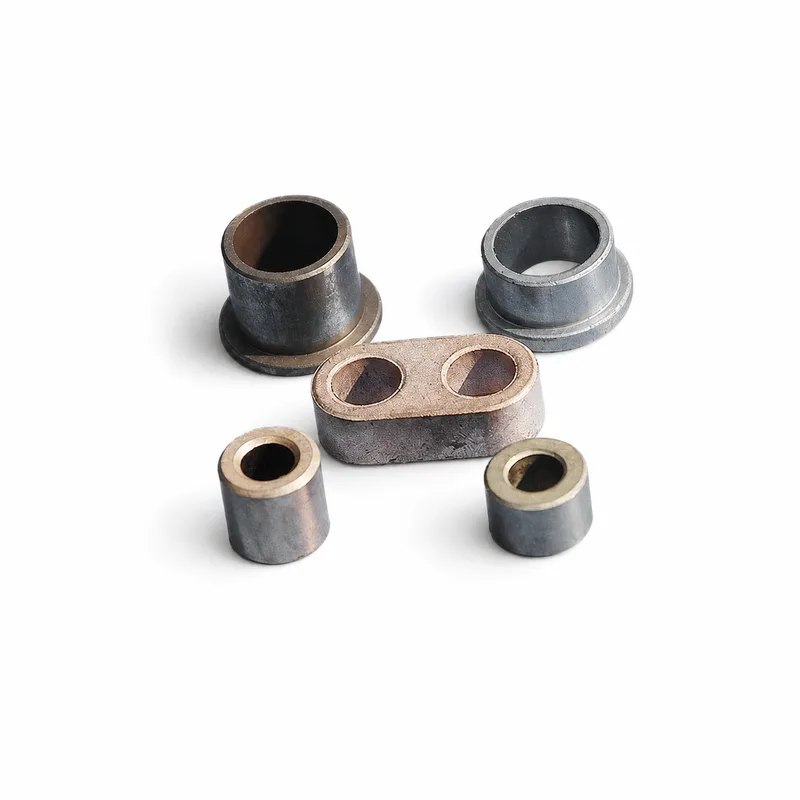
Relevant to rotating or supporting interfaces where density, lubrication, load, sizing and outdoor corrosion requirements influence the specification.
SINTS product reference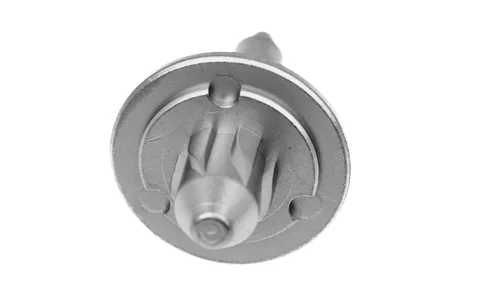
Useful for discussing compact drive geometry while keeping bearing seats, runout and secondary machining separate from the near-net-shape decision.
SINTS manufacturing referenceThe Industry guide adds torque, noise, contamination and outdoor exposure. The Product family pages hold the reusable manufacturing logic.
Tooth geometry, torque, backlash, noise, heat treatment and finishing.
Product family →Density, sizing, lubrication, load and repeat-volume PM economics.
Product family →Bearing seats, runout, rotating interfaces and machining-critical datums.
Product family →Height-adjustment cams, latches, detents, links and compact carriers.
Product family →Wear-intensive or edge-related parts where hardness, impact and finishing dominate; blade safety still requires application-specific validation.
Product family →Repeat-volume gears, bushings and press-compatible structural motion parts where near-net-shape production can reduce machining content.
Small feature-rich locks, cams, adjustment pieces and compact 3D mechanism components that would otherwise need several machining operations.
Shafts, bearing seats, low-volume parts, prototypes and geometry where runout, concentricity, flatness or precision datums dominate the drawing.
Include gear data, bearing seats, datums and any surfaces already known to need machining.
State the current grade, heat treatment and corrosion requirement if already fixed.
Stable platform volume is often what makes PM or MIM tooling economical.
Share normal torque, peak or stall conditions and whether frequent reversing occurs.
For gears, functional noise and play may be as important as dimensional tolerance.
Water exposure, washdown, fertilizer, salt, temperature and contamination influence material and surface choices.
Robotic lawn mowers combine a drive and cutting system, an outdoor environment and a compact enclosed mechanism. These answers cover the gear, bushing and shaft parts that make up most of the metal-component opportunity in these machines.
Repeat-volume spur or planetary gears, bushings and some press-compatible structural motion parts are natural first candidates. Density, tooth loading, noise and corrosion still have to be reviewed.
MIM is more relevant to small complex locks, cams, adjustment parts and compact mechanisms than to large housings or simple shafts. Geometry and annual volume need to justify tooling.
Not automatically. If the shaft is mostly rotational geometry with critical bearing seats and runout, turning and grinding can remain the better route. Near-net-shape methods become more interesting when additional complexity changes the economics.
Corrosion exposure, washdown, grass and mud ingress, temperature range, lubrication, peak torque, cycle life and any safety-critical function should be shared with the drawing.
It covers the drive and cutting transmission, the chassis motion parts and the small mechanisms around them — spur and planetary gears, bushings, output shafts, bearing and wheel interfaces, height-adjustment parts, locking cams and compact actuation hardware. The common thread is that most of these parts run outdoors, in a sealed or semi-sealed enclosure, at repeat volume.
Specify exposure as an environment, not as a single word. Water and washdown, grass and mud ingress, fertiliser and salt, temperature range and UV all affect different materials differently, and a part may need corrosion resistance on one surface and wear resistance on another. Where corrosion protection matters, the requirement belongs on the drawing so it can be addressed through material, density, coating or a combination rather than assumed.
For mower drive trains, acceptable running noise and the permitted play between mating teeth often constrain the design more than the dimensional tolerance does. Tooth form, surface condition, backlash allowance and how the gear meshes under load all feed into that, so noise and backlash targets belong in the RFQ alongside torque. A gear that meets its dimensions can still be rejected if the assembled train is audibly rough.
Send the drawing, which subsystem the part belongs to, the torque and load case including stall and reversing, the duty cycle and expected life, the outdoor and cleaning exposure, the noise or backlash target, the material and hardness of mating parts and the annual volume. Those inputs let the review distinguish a gear part, a bushing part and a structural motion part instead of treating the whole machine as one opportunity.
We can review gear/bushing suitability, machining-critical features, material and likely secondary operations — including cases where CNC remains the better route.